
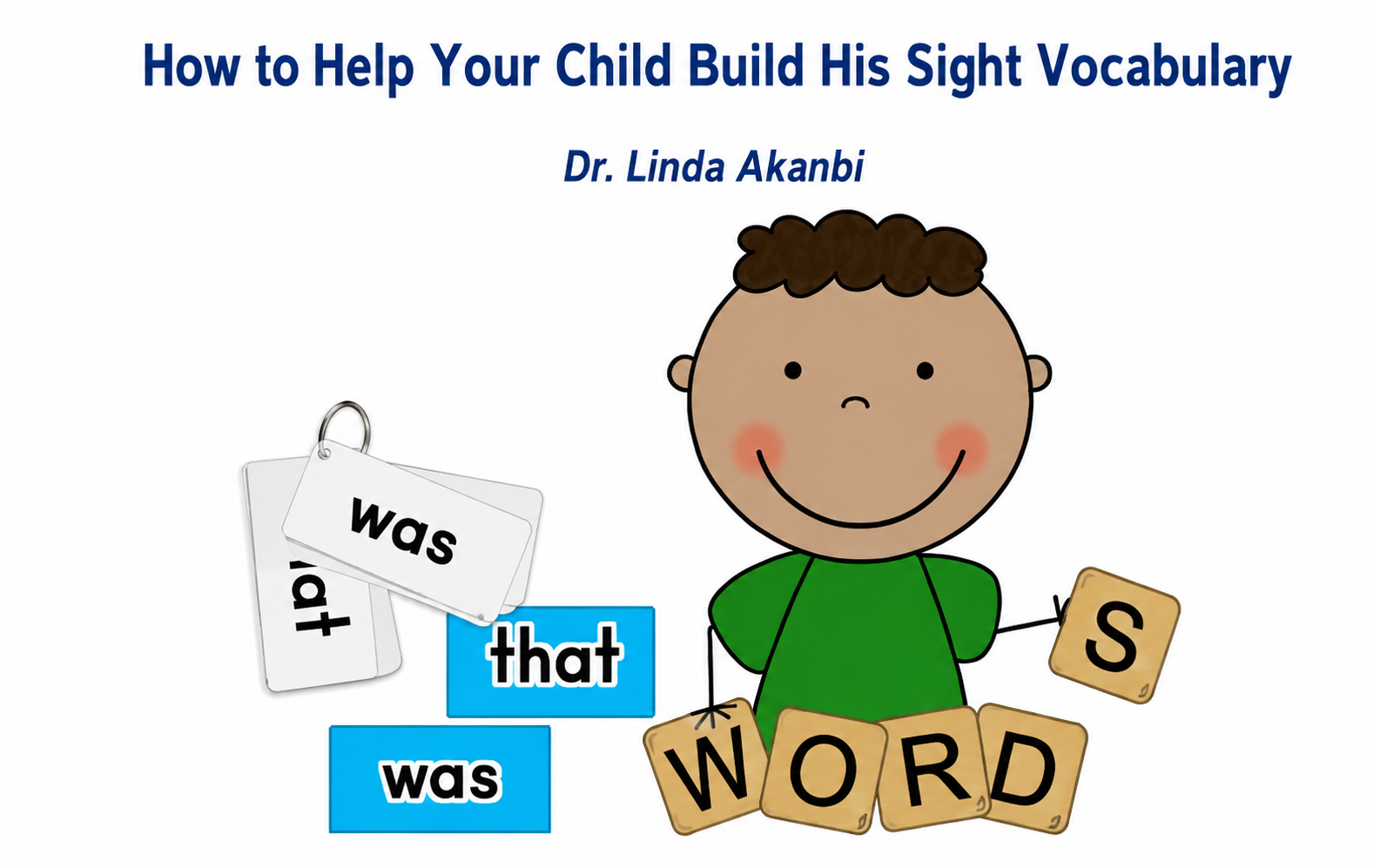
- Beginning with your preschooler, start labeling things around the house.
This can be done simply by printing words neatly with a marker, making the letters about two inches high, on a 4 x 6 index card and taping it to the object. For example, tape the word door to the door, the word bed to the bed, etc. There should only be one word per card. Be sure to point these words out to the child and say the word. Also, have the child say the word and look at the word. This will begin to help him build his sight vocabulary of nouns. Later, these word cards may be used as flash cards for review. - For high-frequency words, there needs to be lots of exposure to the same words in different contexts.
One of the best ways to provide this exposure is through repeated readings of easy reading materials, since these words make up a high percentage of the words in a story. Repeated readings of books that a child can read independently also increase fluency. - Another way to provide repeated exposure to high-frequency words is through the use of flash cards, which can either be made or purchased.
To make this activity more meaningful, have the child use the word in a sentence or, if it is a verb such as jump, act it out. - Word games such as Sight Word Bingo, Concentration, or word-matching games are also good to use and are fun.
- Allowing opportunities for the child to write or dictate stories provides meaningful practice.
Parents or teachers can write the stories on a wall chart, giving the child practice in writing, spelling, and reading words in a meaningful context. Repeated readings of the stories should be done to aid in instant recognition of the words in a story and to build automaticity. - Students can create word banks consisting of self-selected words that they want to learn.
These words may come from a child’s reading materials. Parents, it is very important to remember what to do when your child encounters an unfamiliar word while reading aloud.
If your child cannot figure out the word in about five seconds using whatever decoding skills he may have at his disposal, such as phonics or context clues, tell him the word so that he will not lose comprehension.When doing so, make sure that the child looks at the word and not at you so that he can try to remember and recall the word when he encounters it the next time. In addition, you may want to make a note of the missed word so that you can review it with him later.
Write the word on a card. Then, when your child is able to recognize the word on his own, this word card can be added to his word bank and placed in a notebook or file box.
If a child misses more than five words in what he is reading, that book is probably too difficult for him to read independently.